SIM Cards & eSIMs for the Michinoku Coastal Trail
I get asked surprisingly often which SIM or eSIM is best for the Michinoku Coastal Trail. It's also one of those questions that keeps resurfacing in the MCT Facebook group, usually because what works perfectly well in Tokyo isn't necessarily what you want on a 1,000km trail through rural Tohoku.
If your phone supports an eSIM, that's usually the easiest way to get connected in Japan. You can sort it before your trip and skip hunting for a SIM after you land.
But for the MCT specifically, I'd look at more than price or convenience.
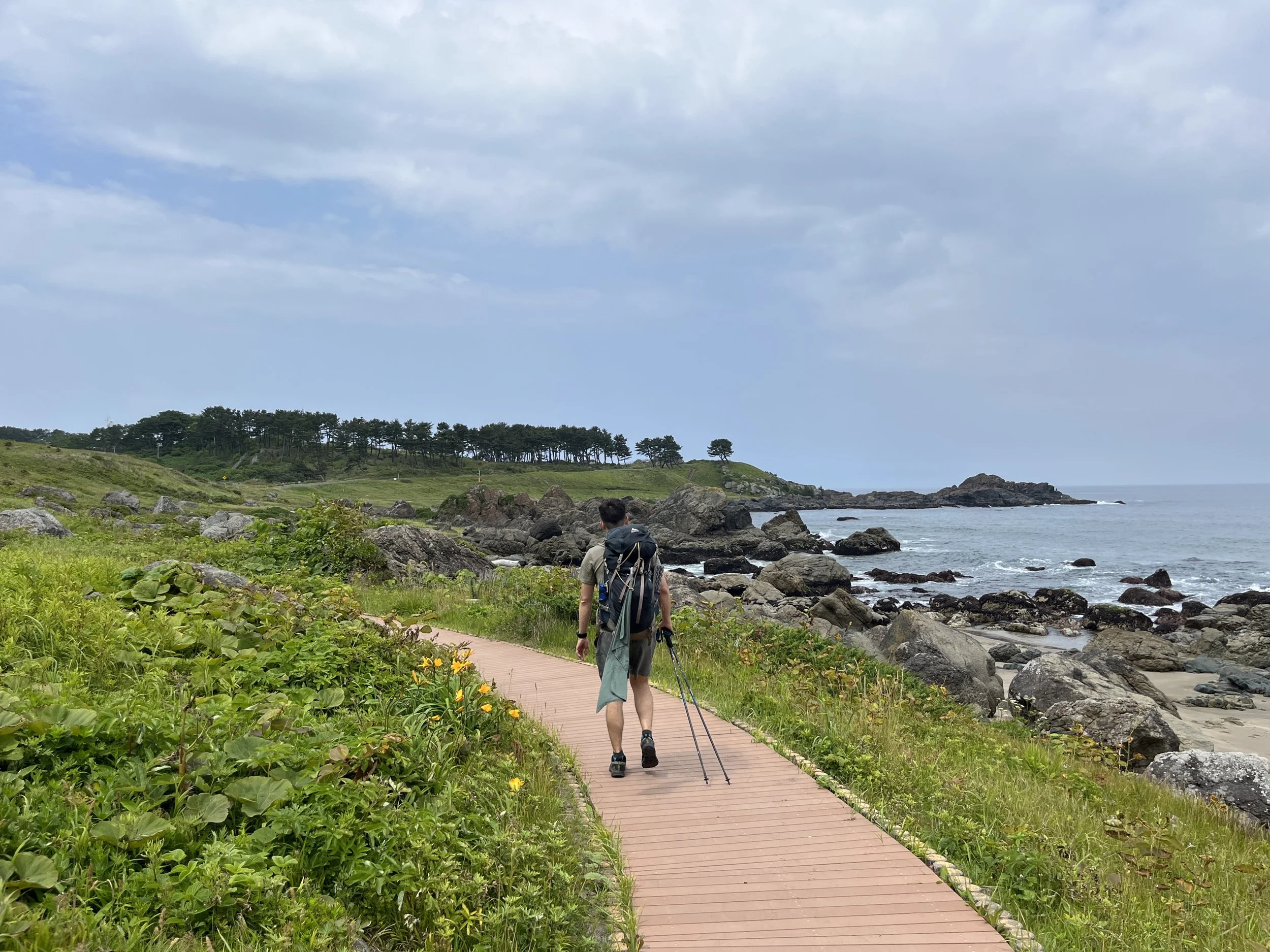
The trail runs for over 1,000km through rural Aomori, Iwate, Miyagi and Fukushima. Coverage is generally fine around towns, but there are dead zones in the forest, cliff and peninsula sections.
My quick recommendations
Airalo
An easy starting point if you mainly want data for navigation, messaging and general travel use.
Check Airalo →Mobal Data-only eSIM
A straightforward option if you specifically want a Docomo-based data eSIM.
Check Mobal →Mobal Voice + Data
Useful on longer trips if you expect to call accommodation, taxis or other local services.
Check Mobal →Sakura Mobile
A data-only alternative with Docomo and au/KDDI options, available as either an eSIM or physical SIM.
Check Sakura Mobile →There's no single "best" SIM here. It depends on your phone, the network you want and whether you need to make calls.
Mobile coverage on the trail
You'll have usable coverage across much of the route, particularly in towns and along the more developed coast, but not everywhere.
Some of the MCT's best sections wander through forest, around remote peninsulas and along cliffs well away from any settlement. Signal weakens or disappears in these stretches.
That's why I would care more about the Japanese network behind a travel SIM here than I would on a normal Tokyo-Kyoto-Osaka trip. I'd give extra weight to plans running on NTT Docomo or au/KDDI for rural travel, though neither covers every corner of the trail.
If you're worried about a specific isolated section, check that carrier's current coverage map.
Most importantly: I highly recommend using the paper maps sold by the Michinoku Coastal Trail Association and downloading the official MCT route maps and GPX data before you set out.
You should be prepared for areas with no signal, even if you don't encounter any.
eSIM or physical SIM?
If you have an unlocked, eSIM-compatible phone, I'd normally choose an eSIM - nothing to collect or swap, and you can set it up before you leave home.
If your phone doesn't support eSIM, a physical SIM works fine. Several MCT hikers I've spoken with have used them without issue, and some liked being able to arrange delivery to an airport or their accommodation ahead of time.
Either way, check your phone is unlocked and compatible before you buy.
Do you need a Japanese phone number?
Probably the most useful distinction to understand.
For most visitors, data alone is enough. Maps, YAMAP, LINE, WhatsApp, email, translation and general browsing all run on data - no phone number required.
But a data-only eSIM doesn't give you an actual Japanese mobile number, and on the MCT that occasionally matters.
a ryokan or minshuku, a taxi company, a campsite, a ferry operator, or another small local business.
A lot of these are small, locally run operations. Some have no online booking, and very few answer WhatsApp.
I wouldn't pay for voice service just because you're hiking the MCT. But if you're out for several weeks and expect to make local calls, a Japanese number earns its keep.
Airalo: the simple data option
If you just want data for navigation, messaging, translation and general use, and don't need a Japanese number, Airalo is where I'd start. There's little to organise, which is the whole appeal.
The trade-off is obvious: it's a data product, not a Japanese voice service. For most people, that's fine.
Check current Airalo Japan eSIM options →Mobal: for Docomo or a Japanese number
Mobal is worth a closer look because it offers several distinct products rather than one generic tourist SIM.
Mobal Data-only eSIM
If you want a Docomo-based option but don't need a phone number, this is the one - simpler than Mobal's voice products since you skip the identity checks a Japanese number requires.
If your decision is purely about data, compare it against Airalo rather than assuming either is automatically better.
See Mobal's Data-only eSIM →Mobal Voice + Data eSIM
Worth considering if you want a real Japanese number alongside data. For a longer MCT trip, being able to ring tonight's accommodation or a local taxi firm directly is genuinely useful.
The trade-off is that, as a Japanese voice service, this comes with extra identity-verification and activation steps compared with a plain data eSIM. Check the current instructions and set it up before you actually need the number.
See Mobal's Voice + Data eSIM →Prefer a physical SIM?
Mobal also offers physical SIMs. If your phone doesn't support eSIM and you want data plus a Japanese number, this is the equivalent product.
See Mobal's Voice + Data physical SIM →Sakura Mobile: another strong data-only option
Sakura Mobile is another established Japan provider that comes up regularly in MCT hiker discussions.
Its travel products are available as both eSIMs and physical SIMs, with current options running on either Docomo or au/KDDI.
That makes it worth comparing if you want a data-only service but prefer having a choice of Japanese network. Sakura also offers physical SIM collection and delivery, which some MCT hikers have found convenient.
Like Airalo and Mobal's data-only option, Sakura's tourist SIMs and eSIMs do not give you a Japanese phone number.
Check Sakura Mobile SIM & eSIM options →What have MCT hikers actually used?
This is why I won't declare one "best" SIM: real feedback doesn't point to a single winner.
Several Sakura Mobile users reported good reception for most or all of their walk. Mobal users have also had success, including on longer stays.
One hiker was particularly happy with Airalo's price and coverage. Another used a high-data eSIM successfully between Hachinohe and Miyako.
Physical SIM users have mentioned the convenience of having it delivered before the trip, to an airport or their accommodation.
Useful evidence, but not proof any one network covers the whole trail. It's too long and the terrain too varied for that.
How much data do you need?
Don't size your data plan by kilometres walked - size it by what you actually do on your phone.
Downloaded maps, messaging, translation and the odd search use relatively little. Regular social media, photo sharing and browsing use more.
If you're uploading video, backing up large photo libraries, making video calls or tethering a laptop, you're in a different category entirely and should look at high-data or unlimited options. Check the fair-use and hotspot limits carefully.
Mobal also offers a 5G Unlimited Data Tourist eSIM for that case.
Otherwise, don't buy a huge plan just because the trail itself is long.
What about pocket Wi-Fi?
A reasonable option for families, groups or anyone connecting multiple devices - but not my default for a solo thruhike.
It's one more device to carry, charge and return. For a single hiker with a compatible phone, a SIM or eSIM is simpler.
If pocket Wi-Fi suits your trip, Mobal offers that too .
Whatever you choose, prepare for no signal
This matters more than which provider you choose.
- Always check for the latest updates from the Michinoku Coastal Trail Association website and ideally carry the official paper maps.
- Download the official MCT maps and GPX route and save them offline.
- Carry a charged power bank.
- Check transport or accommodation details before you leave town.
- Save any phone numbers you might need.
- Let someone know your plans if you're heading somewhere particularly isolated.
If you're running a travel eSIM alongside your home SIM, check your roaming settings too to avoid any accidental roaming bills.
So what would I choose?
For easy data, I'd compare Airalo, Mobal's data-only eSIM and Sakura Mobile. If I specifically wanted a Docomo-based data option, I'd look at Mobal or Sakura's Docomo option.
For several weeks of walking with expected local calls, Mobal's Voice + Data product is the most relevant. For a physical SIM, I'd compare Mobal and Sakura depending on whether I needed a Japanese phone number.
Choose the best option for you, download your maps, and happy trails!
Provider products and network information last checked August 2026 - these things change, so check current details before buying.