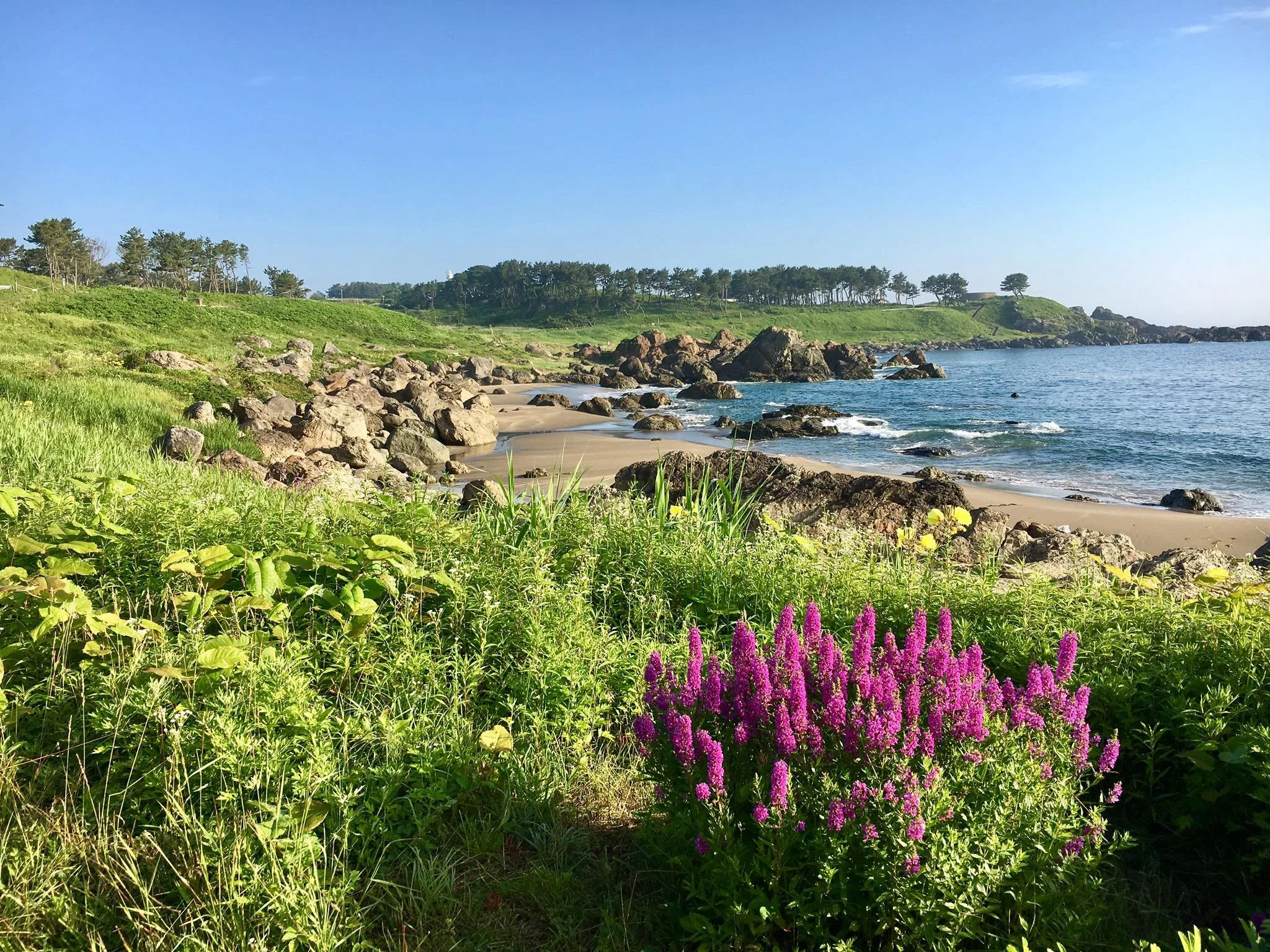
The Michinoku Coastal Trail
More than 1,000 kilometres along Japan's wild northeastern Pacific coast, through fishing communities and places shaped by the 2011 earthquake and tsunami.
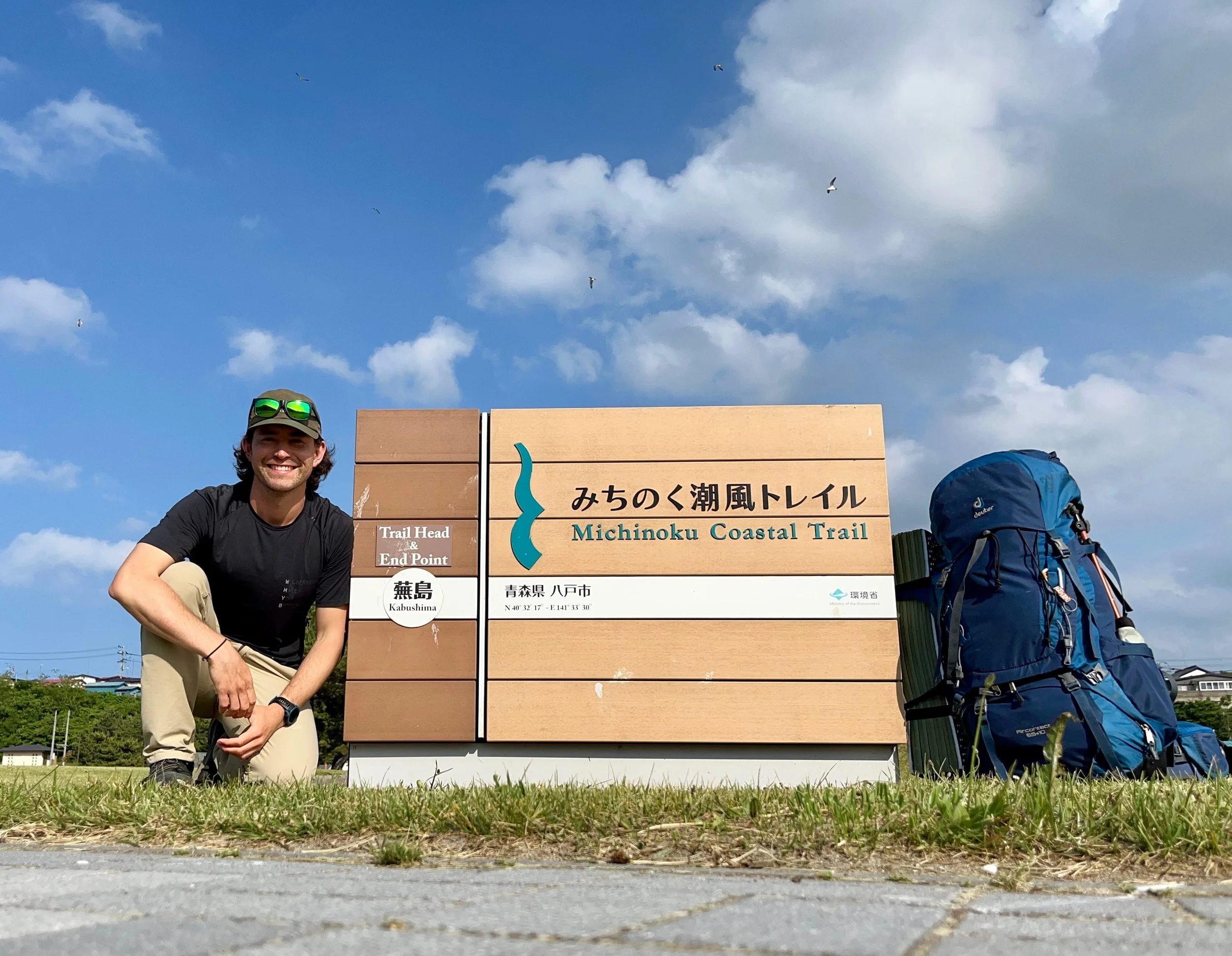
The Michinoku Coastal Trail, or MCT, runs from Kabushima in Hachinohe, Aomori, to Matsukawaura in Soma, Fukushima. "Michinoku" is an old name for this part of Japan, often translated roughly as "the end of the road." It still fits. Tohoku feels far removed from Japan's main tourism hubs, and much of the coast was profoundly reshaped by the 2011 tsunami.
You don't need to walk the whole thing to experience it. A day, a week, a month, or the full 1,000+ km. Whatever you choose, you’ll likely have a unique, memorable journey in one of Japan’s greatest lesser-known regions.
Michinoku Coastal Trail At A Glance


The trail moves constantly between wild coastline and everyday life. One morning you may be climbing above dramatic sea cliffs. That afternoon you could be walking through a fishing harbour, eating at a family-run restaurant or soaking in an onsen overlooking the ocean.
A Trail With a Unique Story
The Michinoku Coastal Trail is not simply a scenic hiking route. On 11 March 2011, the Great East Japan Earthquake and tsunami devastated much of this coastline, claiming almost 20,000 lives.
In the years that followed, a long-distance trail connecting the region took shape as part of the wider recovery: a way to bring visitors back to affected communities, support local economies and help ensure the stories of the disaster weren't forgotten.
The full route was completed in June 2019. Today, walking the MCT means experiencing extraordinary landscapes alongside fishing communities, rebuilt towns, preserved disaster sites and memorials. The landscape and the human story are inseparable.
Where Does the Trail Go?
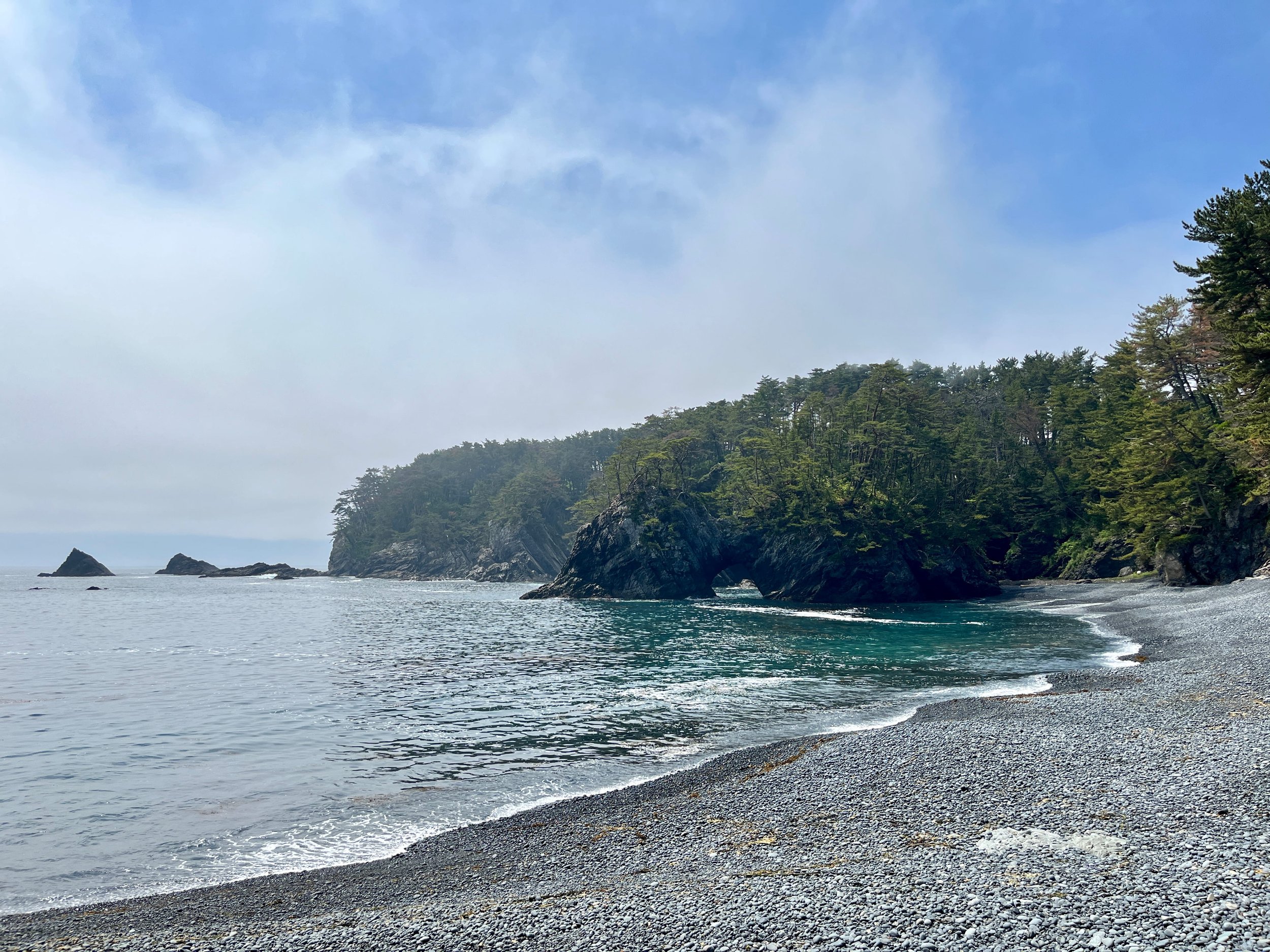
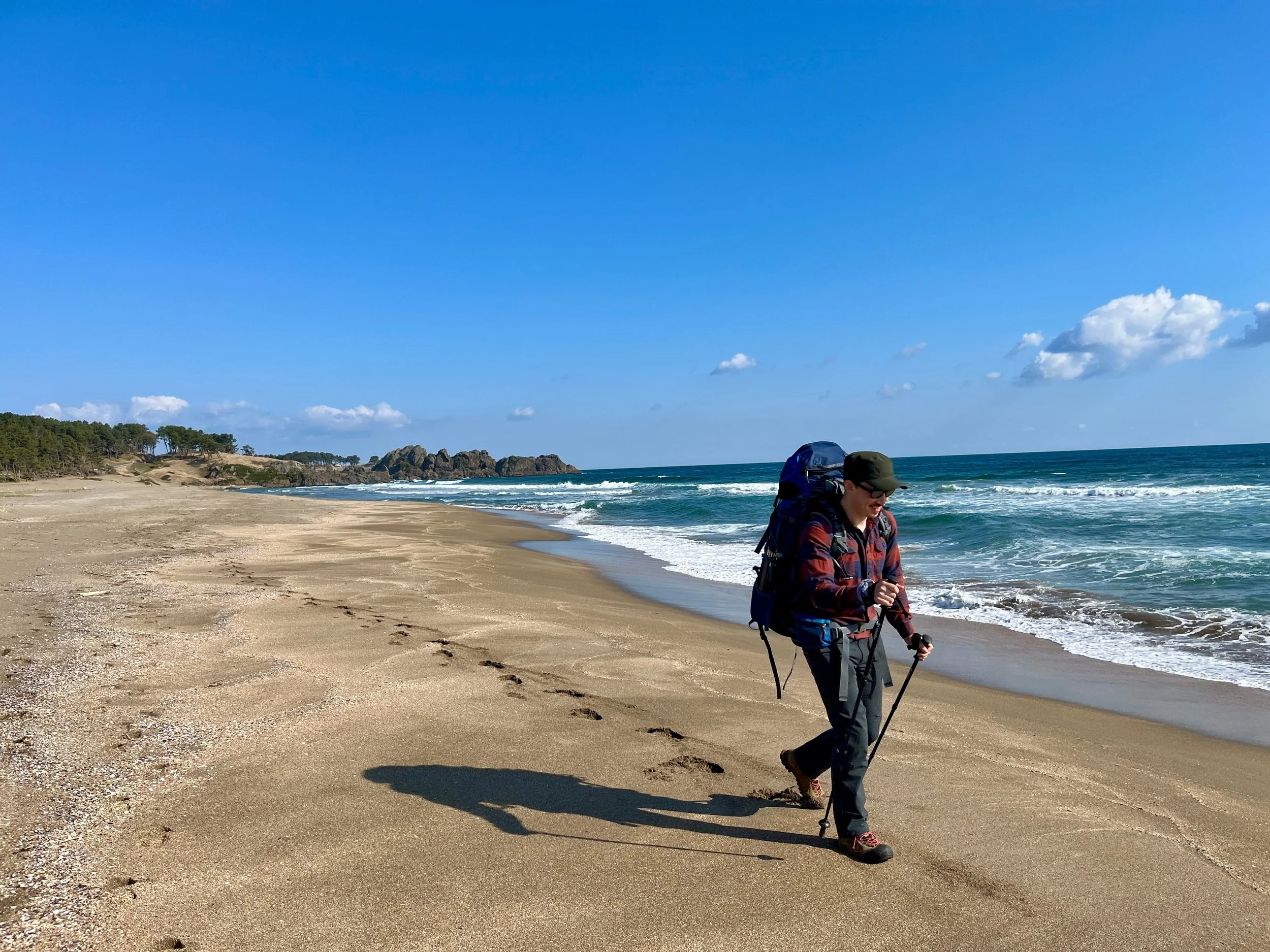
The MCT runs through Aomori, Iwate, Miyagi and Fukushima, and its character changes dramatically along the way.
The Northern Coast: Around Hachinohe and northern Iwate, you'll find the grassy Tanesashi Coast, beaches, forests and some of the trail's most spectacular scenery, including the cliffs of Kitayamazaki and Unosu. This is, in my view, the most dramatic part of the trail.
The Rias Coast: Further south, deep bays and long peninsulas define the coastline. The trail repeatedly climbs away from the sea and drops back into fishing villages and working harbours. This includes Miyako, Yamada, Kamaishi, Ofunato, Rikuzentakata and Kesennuma.
The Southern Coast: Through Miyagi and Fukushima, the terrain gradually becomes flatter and more populated, passing islands, coastal towns and landscapes extensively reshaped after 2011.
Why Walk It?
Landscapes: Grassy headlands, huge sea cliffs, beaches, forests, islands, remote capes and long views across the Pacific. Few trails in Japan pack in this much coastal variety.
Rural Japan: This is a side of Japan most international visitors never see: small fishing communities, local trains, family-run inns, tiny shops and working harbours. Walking slows you down enough to actually notice it.
Food and Hospitality: Sanriku is one of Japan's great seafood regions: sea urchin, oysters, scallops, salmon, wakame and plenty more depending on the season. Some of my best memories from the trail are simply dinner at a small local inn after a long day of walking.
Memory, Reconstruction and People: You'll pass schools, memorial parks, tsunami stones and former town centres connected to the 2011 disaster. That history remains present through much of the route, without the trail ever feeling built around it. Then there are the encounters you can't plan for: someone offering food, inviting you in out of the rain, or a guesthouse owner going well out of their way to help. Long-distance hikers sometimes call this trail magic. I've had more of it here than anywhere else I've walked.
What Is Hiking the MCT Actually Like?
Is it difficult? It varies enormously. Some sections are gentle, while others involve steep climbs, long days and remote terrain.
Is it all natural trail? No. A substantial part of the route follows paved roads and paths.
Do I need to camp? No. Many sections can be walked using hotels, ryokan, minshuku and guesthouses.
Can I walk independently? Yes. Most hikers organise their own trip using official maps, GPX data and local transport.
Do I need to walk all 1,000 km? Definitely not.
For more quick answers on planning, camping, transport, safety and navigation, see the Michinoku Coastal Trail FAQs.
You Don't Have to Walk 1,000 Kilometres
One Day
Try one of the trail's highlights. The Tanesashi Coast near Hachinohe is my usual recommendation for a first MCT walk.
2 to 3 Days
Link several sections together and experience the rhythm of travelling through the region on foot.
4 to 7 Days
For many international visitors, this is the sweet spot: enough time to experience a substantial stretch without building your whole Japan trip around the trail.
1 to 2 Weeks
Go deeper into one region and experience the MCT as a connected journey rather than a series of highlights.
Full Trail
The complete 1,000+ km journey takes most thruhikers several weeks to around two months. I walked it south to north over 52 days in 2022.
Start Planning
Explore the Map
See accommodation, transport, onsen, shops and useful locations along the trail.
Open the MCT Map →Maps and Navigation

For most hikers, I recommend using three things together:
Official Hiking Map Books: Ten bilingual map books covering the full route. They can be ordered online and shipped within Japan or internationally.
Current GPX data: Download the latest official route before walking. Sections change over time, so don't rely on an old GPX file simply because it worked on a previous trip.
My independent interactive MCT map with accommodation, campsites, transport, onsen and other useful locations.
* The Official Data Book is also handy for planning: Detailed distances, elevation changes, landmarks and facilities across the complete trail.
*Use these resources for planning, but always check the Michinoku Coastal Trail Association's latest trail alerts before setting out. The Association is the authoritative source for current route changes, closures and official GPX information.
Built From First-Hand Experience
I started walking along the MCT in 2017 and completed a thruhike over 52 days in 2022. I've kept coming back since. Between the thruhike and everything before and after it, I've now walked more than 2,000 km of the trail.
MichinokuTrail.com is an independent guide, combining first-hand experience with practical, current information.
Go Deeper
Walking the Michinoku Coastal Trail: A Practical, Independent Handbook for International Hikers
I'm also writing a book about the trail, combining first-hand stories, practical planning advice, routes, accommodation, food and local experiences. It's designed particularly for international hikers planning their own journey. Sign up to the book launch list to be first to find out about the release date, as well as for pre-launch discounts and an opportunity to shape the book’s content too.