Recommended Section Hike:
Kuji to Taneichi

Looking out from the Yokonuma Viewpoint
Kuji to Taneichi Section Hike
Starting off in the town of Kuji, home to the renowned Ama women divers, this section traverses fishing villages, rivers, beaches and mountain passes, and features a memorable blend of blue waters and rugged rocky outcrops.

Start Point: Kuji City
End Point: Taneichi Station
Length: ~ 40kms
Time: Approximately 2 Days
Difficulty: Moderate
Elevation: 890m Ascent, 870m Descent
Elevation Profile

Accommodation for the Kuji to Taneichi hike
This section is usually walked over two days. Accommodation around Kitasamuraihama is very limited, so non-campers need to plan their overnight logistics carefully.
A practical option close to Kuji Station, with coin laundry on site. I've stayed here with several hikers and found it comfortable, convenient, and good for accessing the railway.
Check availability on Agoda →Right at the Taneichi end of the route, with accommodation, meals and a large bath in the same building. I stayed here several times - this is a MCT hikers' favourite.
Check availability on Rakuten Travel →These are affiliate links. I may earn a small commission that helps this website continue, at no extra cost to you.
Nestled on Iwate Prefecture’s Kosode Coast lies Kuji City - famous as the home to Ama women free divers, who have been exploring the region’s deep blue waters for centuries. Diving down to depths of 10m without oxygen tanks, the Ama divers brave icy temperatures as they search for sea urchin, abalone and seaweed. Kuji was chosen as the filming location for NHK’s hit TV series “Ama-Chan”, a piece chronicling the lives of these fearless divers. To find out more about the Ama and see them in castion, visit the Kosode Ama Center.

Kosode Coast

Kosode Ama Center

Meeting real-life Ama Divers!
Fun fact: The Kuji area is also known for its amber production and is said to be one of the world’s largest amber mining sites.

Michi-no-Eki Yamase Dofukan
If you’re curious about local cuisine or want to stock up before you head off for your walk, stop by the Michi-no-Eki (roadside rest area) Yamase Dofukan near Kuji Station, where you can find a range of treats.
From there, walk along the coast towards Moguranpia Aquarium, a local aquaraium that was destroyed by the 2011 tsunami, but made a triumphant return some five years later.
Proceed through a quiet village to Itsukushima shrine, a beautiful shrine with several torii gates and a pleasant view of Ushijima Island. Be sure to check out the wooden dragon and lion that have been masterfully carved onto the shrine's crossbeams.
From there, make your way up to the coast towards Yokonuma viewpoint, which offers a spectacular view on a sunny day (see photo above).
Follow the coastal path to Samuraiishi Rock, a large granite rock platform jutting into the sea, and then onwards to Kitasamurai-Hama Campsite. Set amidst Japanese red pine trees, the campground has picturesque views of the seashore and has wooden platforms for tents. In the summer, take a dip in the saltwater pool below, sculpted into natural bedrock. Stay the night here (Kuji - Kitasamurai-Hama campsite is approximately 15 kms), or continue onwards depending on how your legs feel and weather conditions.
**Note: If you do not have a tent, accommodation around Kitasamuraihama is extremely limited. A potential option for non-campers is to continue on to Rikuchi-Nakano (approx. another 5 kms ahead), and then get a train either back to Kuji or further north where there are more train options, but please make sure to check train times.
Consider using Kuji as a base
If you're not camping, one practical option is to use the railway to split the route and stay in Kuji. Kuji Grand Hotel is a comfortable option close to Kuji station.
Check Kuji Grand Hotel on Agoda →
Kitasamurai-Hama Campsite

Samuraiishi Rock

A beautiful sunset along the trial
After the campsite, walk onwards to Koge River crossing.
Make sure to check the river level beforehand and avoid attempting this at night. The depth of the water may vary depending on seasonal rainfall; be careful and only cross when it is safe to do so. If necessary, opt for the detour around the river – it won't take much longer!
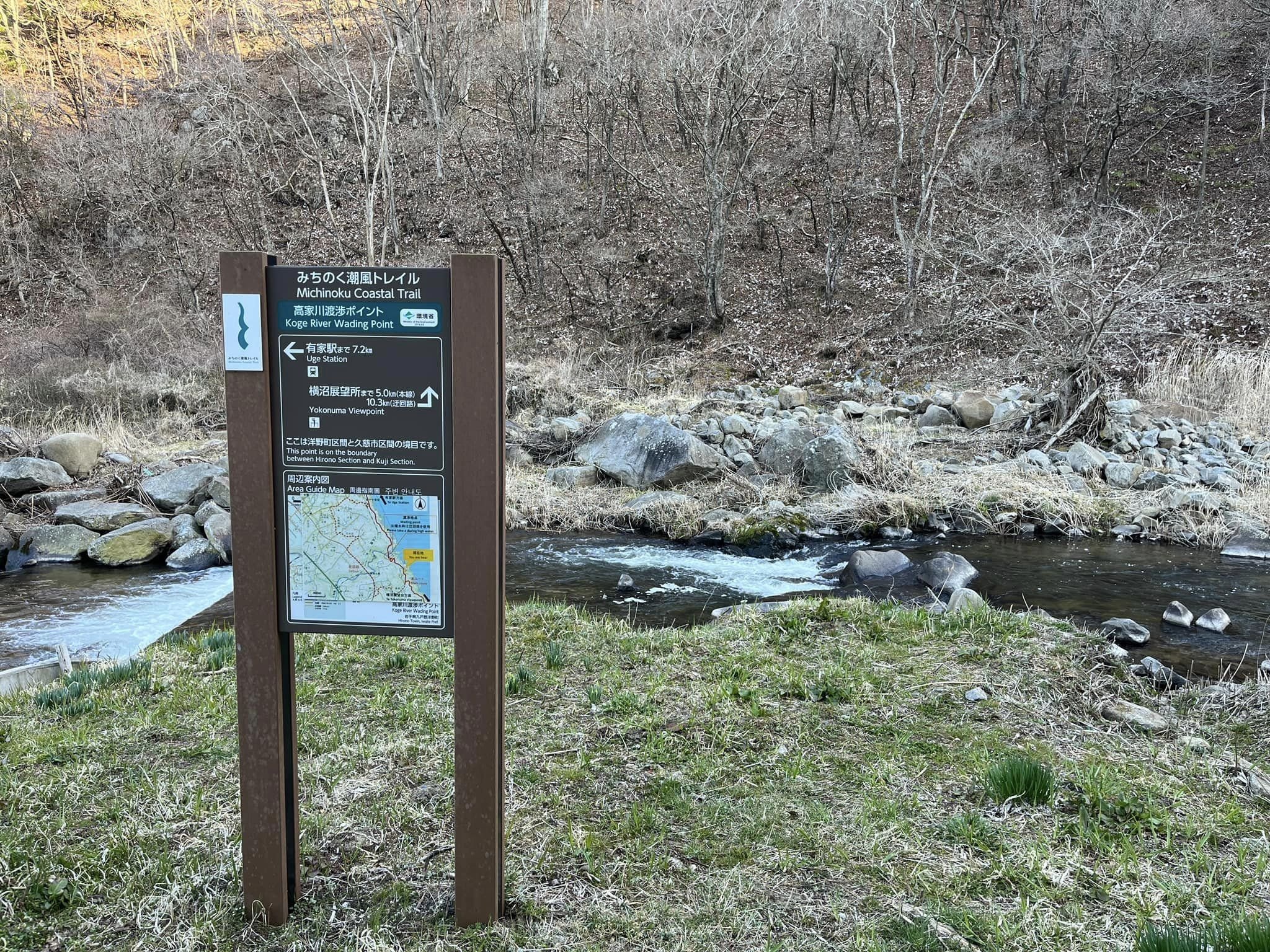
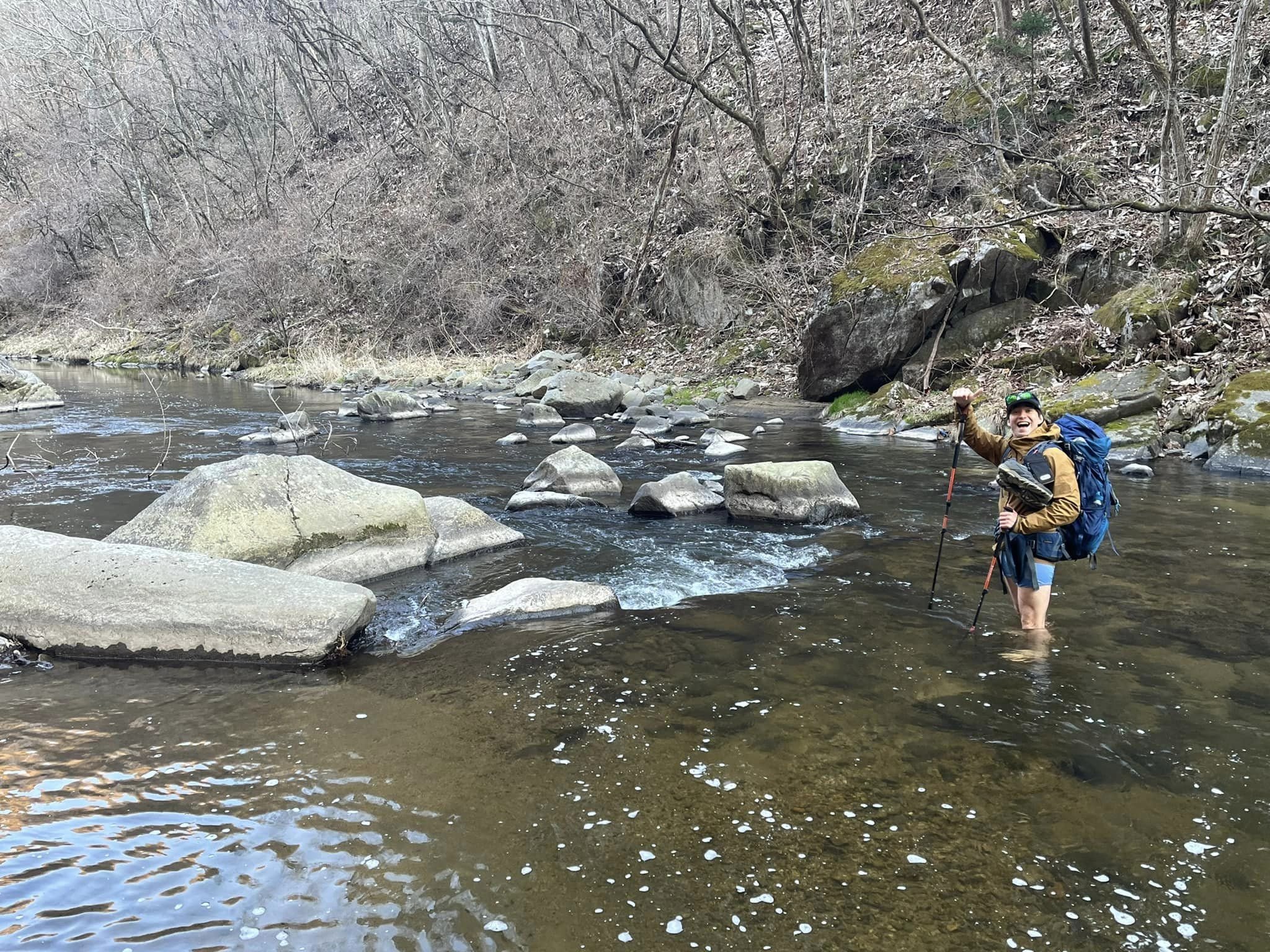
After crossing safely, head upwards toward Rikuchu-Nakano station and Uge Beach.
A lot of this following section is walking along quiet roads, but the views are pleasant. There are also train stations at relatively regular intervals, so feel free to hop on a train if your legs are tired.

North of Rikuchu-Nakano station

South of Uge Beach

Uge Beach

Hirono Town
Continue onwards along the coast until arriving at followed by Taneichi campground – an ideal spot for a break.

Finally, reach the Taneichi Station area, where you can unwind at Marine Side Spa Taneichi. I’ve stayed here several times and found it an extremely useful stop. As well as the large bath, there is accommodation and a restaurant in the same building, making it a particularly convenient place to finish this section for the day. There is also a supermarket nearby for resupply.


Marine Side Spa Taneichi
If you are finishing your walking day in Taneichi, staying here means you can combine a bed, meal and bath in one very convenient stop.
Check availability on Rakuten Travel →This marks the end of a delightful couple of days exploring the Michinoku Coastal Trail!