Michinoku Coastal Trail Packing List: What to Bring
What do you actually need to carry on the Michinoku Coastal Trail? I've been walking the MCT since 2017. My packing setup has changed a lot along the way. My first long-distance MCT pack was far heavier than it needed to be. The list below is based on what I've carried, what I've learned and what I'd pack now, but its just a reference! A day hike along the Tanesashi Coast requires very different gear from a multi-week camping trip through remote sections of Iwate. Your season, accommodation and hiking style matter too.
The basic rule is simple: carry what you need to stay dry, warm, hydrated, navigated and safe, without carrying half your house with you.
Affiliate note: Some links on this page are affiliate links. If you buy something through them, I may earn a small commission at no extra cost to you. I only include gear that I think is genuinely relevant to walking the MCT. As an Amazon Associate I earn from qualifying purchases.
First: What Kind of Hike Are You Doing?
Day hike
Keep things simple. A small pack with rain protection, water, food, your phone, navigation, a warm layer where appropriate and a few basic emergency items is generally enough.
Multi-day, staying indoors
Walking between hotels, ryokan, minshuku and guesthouses lets you travel considerably lighter. You won't need a tent, sleeping mat, stove or most camping equipment.
Camping or thruhiking
Once you're carrying your own shelter and sleeping system, weight rises quickly. Food, water capacity, charging and weather protection also require more planning.
Packing for the Season
Spring: Expect pleasant walking temperatures mixed with cold mornings and evenings, rain and occasionally much cooler conditions in the north. Bring proper rain protection and a warm layer.
Summer: Think heat, humidity, sun and insects. Carry more water capacity, sun protection and insect repellent. A lightweight sun umbrella can be surprisingly useful on exposed road sections.
Autumn: One of the nicest times to walk. Expect cooler mornings and evenings as the season progresses. Warm layers and rain protection become increasingly important.
Winter: This needs more careful planning. Short daylight, cold temperatures, ice or snow on some upland sections and seasonal facility closures all change what you'll need.
SEE THE MCT WEATHER & WHEN-TO-GO GUIDE →
The Basics
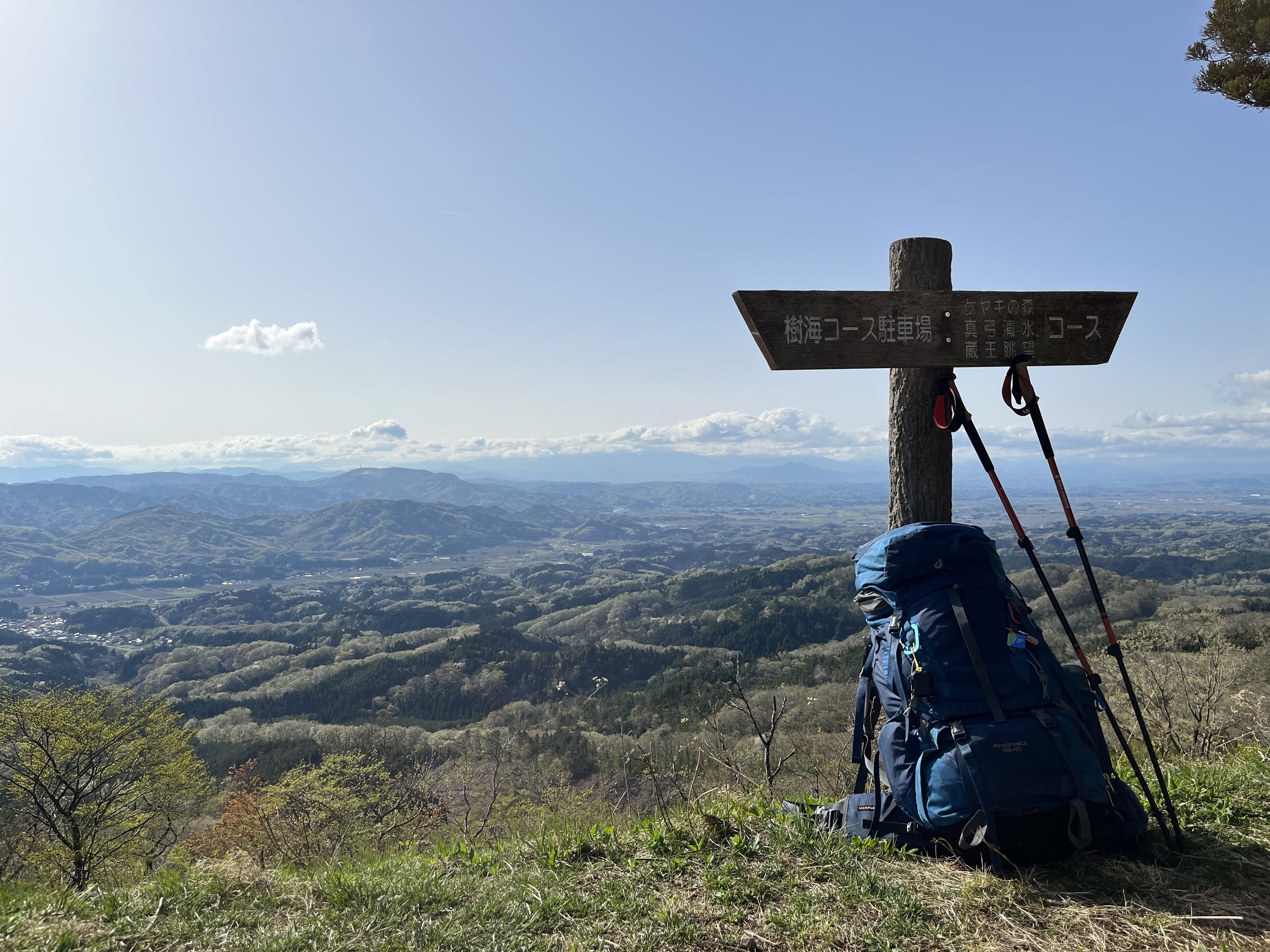
Whatever your hiking style, don't compromise on proper rain gear, a headlamp, enough phone charging capacity and comfortable footwear you've already tested. Trekking poles are also well worth considering for longer trips and the steeper northern sections. I used them on my thruhike and would take them again. These are ordinary hiking essentials rather than MCT-specific recommendations, so I'm not going to tell you which power bank or pair of shoes to buy.

Need Something While You're Already Hiking?
Amazon Japan can deliver many eligible orders to pickup locations, including Amazon Lockers and convenience-store counters.
That can be genuinely useful when you're moving from town to town. Lose a charging cable? Need another dry bag? You may be able to order it ahead and collect it further along your route.
When ordering from Amazon.co.jp, choose an official pickup location / 受取スポット during checkout and check the delivery date carefully.
Not every product or convenience store is eligible, packages are only held for a limited time, and camping gas and other dangerous goods cannot be sent to Amazon pickup points.
Don't Forget the MCT Trail Supporters
You don't have to solve every problem from inside your backpack.
The official MCT Trail Supporters network includes local shops, accommodation and other facilities offering help such as water, toilets, charging, Wi-Fi, showers, laundry, luggage storage, tent space, food, camping gas and hiking supplies.
Services and opening hours change, so check the current official list rather than assuming something will be available.
See Current Trail SupportersSmall Things That Make Particular Sense on the MCT
These aren't necessarily the biggest or most expensive things in your backpack. They're the things an experienced hiker coming from overseas might not think to bring specifically for this trail.
Waterproof Map Case
The official MCT Hiking Map Books are A5-sized, so keeping the map you're using protected from Sanriku rain makes a lot of sense. The Sea to Summit Waterproof Map Case has plenty of room for an MCT Map Book while keeping it easy to reach.
Why it makes sense here: I strongly recommend carrying the official paper maps alongside digital navigation.
Check on Amazon Japan Affiliate linkHydration Reservoir
I used a CamelBak reservoir on the MCT and loved having water immediately accessible while walking. On longer or more remote sections, having decent carrying capacity is particularly useful.
I normally combined the reservoir with a separate reusable bottle rather than relying on just one water container.
Check on Amazon Japan Affiliate linkLightweight Hiking Umbrella
An umbrella might seem strange on a long-distance trail, but it can be surprisingly useful on the MCT's long road, town and open sections, both for rain and strong summer sun. The WAQ Field Umbrella is a compact outdoor-focused option.
I wouldn't use an umbrella instead of proper waterproofs on exposed trails or in strong wind.
Check on Amazon Japan Affiliate linkReflective LED Light Band
A significant amount of the MCT follows roads. I try to avoid walking after dark, but long days don't always go to plan. The TERUI reflective LED band is a small, lightweight option that can help make you more visible to drivers.
It weighs very little and is easy to keep in your pack until you need it.
Check on Amazon Japan Affiliate linkCompact Manual Air Horn
I carried a compact manual air horn on the MCT as an additional emergency noise-maker. The one I'm linking to below is the type I've used: small, manually operated and able to produce a very loud sound without relying on a gas cartridge.
I wouldn't carry this instead of a bear bell or normal bear precautions. See my full bear guide for how I approach bear safety on the MCT.
Check on Amazon Japan Affiliate link MCT Bear Safety Guide →Also worth considering
Spare rubber tips for trekking poles: Easy to lose and useful if you're already bringing poles.
A tick remover: Particularly worth considering in the warmer months!
A separate wet/dirty-clothes bag: Handy when a muddy hiking day ends with a train journey, a spotless ryokan or a public bath.
A small radio: I carried one on my thruhike. It can also be useful for a solo hiker wanting to make their presence known on quiet forest sections.
A “tenugui”: These thin Japanese cotton towels weigh very little and dry quickly. Rather than buying one online, I'd wait and pick up an MCT-branded one from a visitor centre or local shop if you see one.
For bear bells, bear spray and current bear advice, see the dedicated guide.
Michinoku Coastal Trail Packing Checklist
Use this as a starting point and remove whatever doesn't make sense for your hike.
Backpack & Waterproofing
Hiking backpack
Backpack rain cover and/or pack liner
Waterproof bags for important gear
Small dry bag for electronics
Lightweight bags for organisation
Tip: Choose your backpack after deciding what you're actually carrying. My own large pack made sense partly because I was camping and, unusually, working remotely while hiking (with my laptop and camera!). Most inn-to-inn hikers should be able to travel much lighter.
Clothing
Hiking trousers and/or shorts
Hiking shirts
Long-sleeve layer
Lightweight warm layer
Waterproof jacket
Waterproof trousers
Hiking socks
Underwear
Hat
Sunglasses
Sleep clothes if camping
Buff or neck gaiter if useful
Comfortable hiking footwear
Make sure to break your shoes in before the trip; a 1,000km trail is a bad place to discover that something rubs!
Electronics
Phone
Power bank
Charging cable(s)
Wall charger / appropriate Japan plug setup
Rechargeable headlamp
Earphones if wanted
Watch or GPS watch if you normally use one
You probably don't need a separate portable Wi-Fi device if you have a suitable SIM or eSIM.
Navigation
Relevant official MCT Hiking Map Book and/or Data Book
Current official GPX file
Offline-capable navigation app
Relevant maps downloaded before setting out
Waterproof map storage
Don't rely on ordinary Google Maps to follow the MCT itself. The route changes occasionally, phone reception disappears in some areas and waymarking isn't enough to navigate every section reliably.
Water & Food
Reusable water bottle and/or hydration bladder
Enough water capacity for the section you're walking
Collapsible extra water capacity where useful
Electrolytes in hot weather if you use them
Emergency snacks / food
Food for remote stretches where required
On my thruhike I commonly carried a hydration bladder plus a reusable bottle. I also carried a BRITA filter bottle, although tap water in Japan is already safe to drink and a filter bottle is not essential.
Water and food availability varies dramatically between sections. Don't decide how much to carry from a generic packing list.
Safety & Small Essentials
Small first-aid kit
Sunscreen
Insect repellent
Anti-chafe balm
Hand sanitiser
Quick-dry towel or tenugui
Tissues / toilet paper
Personal medication
Bear bell
Trekking poles if appropriate
Something reflective
Tick remover in warmer months
Emergency contact and travel-insurance details
I carried Vaseline as an anti-chafe option on my longer walks. It isn't glamorous gear, but after several consecutive days of heat, sweat, salt and repetitive movement, you may be very pleased you packed some!
Money, Documents & Miscellaneous
Cash
Credit/debit card
Passport or required identification
Travel insurance details
Pen
MCT Hiking Passport if collecting stamps
Cash is still useful along the MCT. Small accommodation, campsites, local shops and other businesses do not all accept cards. The MCT Hiking Passport is optional, but collecting stamps from communities along the trail is a fun way to record a longer journey.
Camping Gear
Skip this section if you're staying in accommodation.
For camping trips, add:
Tent & Tent footprint or groundsheet if required
Sleeping bag or quilt appropriate to expected temperatures
Sleeping mat
Pillow if wanted
Camping stove
Pot / cooking container
Spork or utensils
Lighter or ignition backup
Camping food
Lightweight clothes line if useful
Camp footwear if you value giving your feet a break
I carried a “NEMO Hornet Storm” tent on my later MCT setup. I'm mentioning that as something I used, not saying everyone walking the MCT should buy the same tent. There is a good network of campsites along parts of the trail, but they're not evenly spaced and some are seasonal. Work out where you're sleeping first, then decide whether carrying camping equipment makes sense!
Camping Gas: Buy It in Japan
You cannot take camping gas canisters onto a flight to Japan, either in your carry-on or checked baggage. Plan to buy fuel after you arrive.
If you use the common screw-threaded backpacking canisters usually called OD cans in Japan, availability along the MCT is reasonable but uneven.
Good places to look include:
- Outdoor shops
- Larger home-improvement stores such as DCM
- Selected MCT Trail Supporters
- TRAIL GATE at the Natori Trail Center
Shiga Sports in Miyako is another useful local option and has stocked SOTO Power Gas and Jetboil JetPower. I'd still confirm current stock rather than planning your entire fuel strategy around any single shop.
If you're thruhiking, identify your next reliable fuel stop before your current canister gets close to empty.
You'll also see long, slim CB or cassette-gas canisters widely sold in Japan. They're easier to find, but require a compatible stove, so don't assume they'll fit a standard screw-threaded backpacking stove.
And don't plan to order gas canisters to an Amazon Locker or convenience-store pickup point - they can't do that as gas is considered hazardous.
Check Trail Supporters See TRAIL GATEWhat You Probably Don't Need
This is almost as important as the packing list. On my first long MCT walk in summer 2017, my loaded backpack weighed around 25kg…! I was carrying a DSLR, tripod, laptop and other equipment because I was documenting the project as I went. Unless you have a very specific reason, think twice about:
a laptop
a separate camera plus multiple heavy accessories
duplicate electronics
excessive spare clothing
more food than the next section requires
a huge backpack simply because you own one
You don't have to go ultralight; but every unnecessary item gets carried up every hill. You don't have to arrive with a perfect setup either. Larger cities along or near the trail, particularly Sendai, have major outdoor shops. Amazon Japan pickup points also give you another option for replacing smaller items while you're moving.
Before You Leave
A few things to do other than packing:
Download the current official GPX files from the MCTA
Download offline maps
Get the relevant official Hiking Map Books
Check current MCTA trail alerts
Set up your SIM/eSIM
Save important reservations offline
Check the weather
Tell somebody where you're plan, especially if hiking solo
Confirm food, water and accommodation on remote sections
Identify likely resupply points if you're carrying camping gas
Make space on your phone for far too many photos
MCT Packing FAQ
Do I need camping gear for the Michinoku Coastal Trail?
No. Many sections can be walked while staying in hotels, ryokan, minshuku and guesthouses. Plan around the available accommodation, particularly in remote areas.
Do I need trekking poles?
Not everywhere, but I'd bring them for longer hikes and the steeper northern sections.
Do I need a headlamp if I'm not camping?
Yes. Parts of the MCT pass through unlit tunnels, and it doubles as emergency backup if a day runs long.
Do I need a water filter?
Not for normal tap water, which is safe to drink in Japan unless marked otherwise. Natural water sources are different.
Can I buy camping gas along the trail?
Yes, but availability isn't even. Outdoor and home-improvement stores plus selected Trail Supporters are your best bets. Plan your next fuel stop before your canister is nearly empty.
Can I send Amazon orders to a convenience store while hiking?
For many eligible Amazon Japan products, yes. Choose an official pickup location during checkout and make sure you'll reach it within the collection window. Gas canisters and other dangerous goods aren't eligible.
Can I buy hiking gear in Japan?
Yes. Japan has an excellent outdoor industry, including major stores in Sendai and smaller shops along the MCT. I'd still arrive with anything critical to fit or comfort already tested, especially footwear.
Continue Planning Your MCT Trip
Planning an MCT Trip?
I'm also writing a practical, independent handbook to the Michinoku Coastal Trail based on years of walking the route.
Join the book launch list for updates, early access and occasional MCT planning advice.
Join the Book Launch List