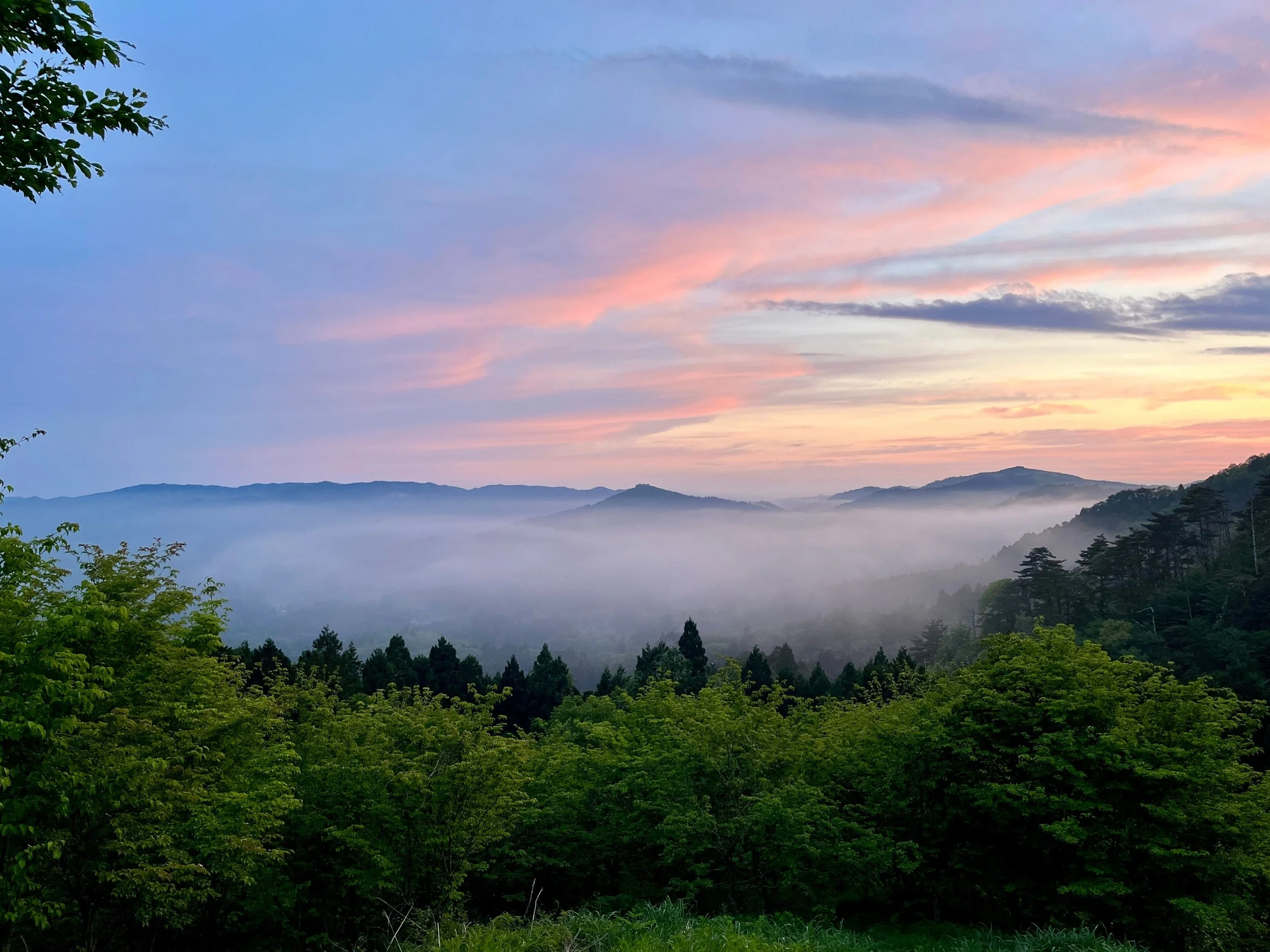
Sunset in the mountains, Michinoku Coastal Trail
Food, Water & Resupply
The best places to find a hot meal, reliable resupply and emergency calories can be convenience stores (these can be like an oasis after a long day’s walk), restaurants, supermarkets, roadside stations (michi-no-eki), markets and fish-market districts. The trick isn't finding good food (there’s lots of it!). It's timing it and knowing which stretches you need to plan around before you set off. Here’s a short summary fo food, water, toilets and resupply along the Michinoku Coastal Trail
Last updated: August 2026.
Is Water Easy to Find?
Generally, yes, but plan carefully, especially during the hot summer season. Tap water in Japan is safe to drink unless marked otherwise. I refilled whenever I had the opportunity, including at accommodation, visitor centres, public facilities and, where appropriate, convenience stores and other businesses.
In my experience, finding water wasn't difficult as long as I topped up when I had the chance. If you're asking to refill at a shop, restaurant or other private business, be respectful and ask first. On my thruhike, I generally carried at least 1.5 litres, with capacity for up to 3.5 litres when heading into more remote sections, along with small sachets of electrolytes when it was hot and sticky.
You can also use mymizu, a free water-refill app covering cafes, shops and public refill points across Japan, including along this trail. Full disclosure: this is an app that I started and have been running since 2019; it has now been used by 700,000+ people and maps out 15,000 free water points nationwide! It exists to reduce single-use plastic, and it pairs naturally with Japan's tap-water culture on a long walk.
The official Data Book remains one of the best planning tools for identifying water and other facilities along your route. And don't assume natural water is automatically safe to drink. One example worth knowing: near Mt Karo on Section 10, don't plan your water supply around Mayumi Shimizu. Its flow can be unreliable and it has been reported dry. The Michinoku Coastal Trail Association’s current model course instead identifies Ukon Shimizu further along the route as the water stop.
Even with established springs, carry enough water to reach your next confirmed source. And remember that in winter, some outdoor taps and seasonal water facilities are also shut off entirely, so check before relying on a specific point.
What I Carried
For peace of mind, I carried a 600 ml BRITA Active-style filter bottle, similar to the one linked below.
Tap water in Japan is already safe to drink, so a filter bottle isn't essential. I simply liked having one as part of my normal refill setup.
I treated it as a bottle and filter for normal drinking-water sources, not as a purifier for untreated river, stream or questionable spring water.
The more important habit was refilling whenever I had the opportunity rather than waiting until I was almost empty.
Affiliate disclosure: If you buy through an affiliate link on this page, I may earn a small commission to help keep this website going, at no extra cost to you.
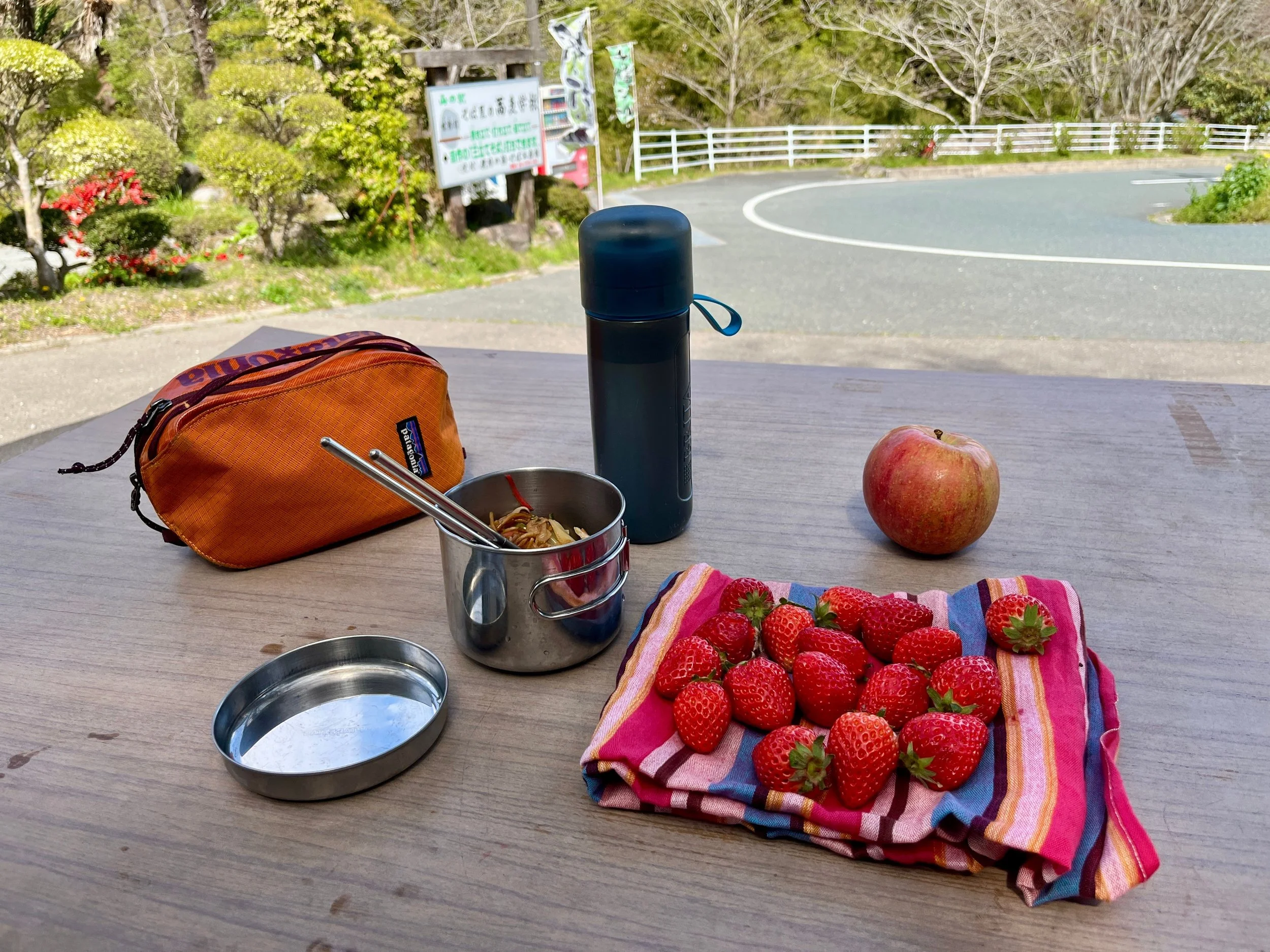
A quick lunch before ascending Mt. Karou, Fukushima, with a handful of fresh strawberries and 600ml BRITA filter bottle
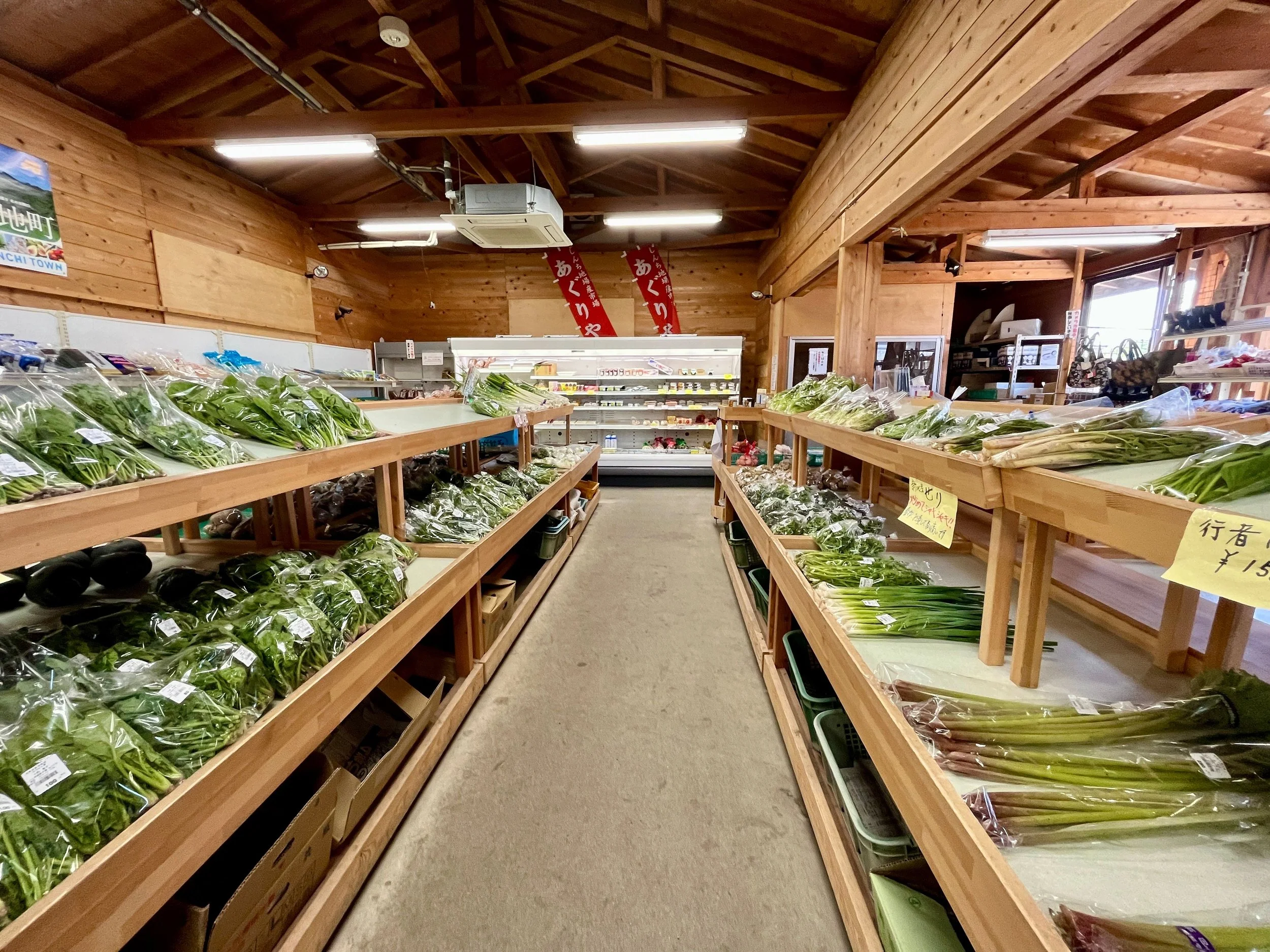
Aguriya Market - a local farmer's market in Shinchi Town, Fukushima
What About Toilets?
Generally, toilets are easier to find than you might expect, but the gaps get much longer on remote sections. You'll find public toilets at many stations, visitor centres, roadside stations (michi-no-eki), parks, campsites and tourist sites along the route. Convenience stores are often very useful too, although toilet access isn't guaranteed at every branch, so check the signage or ask rather than assuming.
The official Data Book is again one of the best tools for checking where facilities are located. Before heading onto a remote peninsula or long forest section, look ahead rather than assuming another toilet will appear.
Important: Some outdoor toilets and water facilities are closed in winter, particularly at campsites and seasonal visitor facilities.
As with water refills, be respectful when using facilities at small businesses or private establishments. If you're stopping at a cafe, shop or restaurant purely to use the toilet, ask first and, where appropriate, buy something. I never found toilets to be a major problem on my own thruhike, but I got into the habit of using them whenever I had the opportunity rather than waiting until I really needed one.
Where to Buy Food
The larger trail towns are genuinely well stocked. Major resupply hubs include Hachinohe, Kuji, Miyako, Kamaishi, Ofunato, Rikuzentakata, Kesennuma, Minamisanriku, Onagawa, Ishinomaki and the Sendai area. These are the easiest places to make a substantial resupply, with supermarkets, convenience stores, restaurants and often markets or roadside stations. Between them, supplies thin out, sometimes gradually and sometimes almost completely.
Major Towns: Well Stocked: Use the larger towns to restock properly rather than simply buying enough for the next meal. If you're approaching a remote peninsula, this is where to add emergency food and extra water capacity.
Sparse-Resupply Stretches: Stock Up First: Some sections have food available, but not enough to rely on without checking. Noda to Fudai, Section 2: resupply is sparse rather than absent. Stock up in Noda or along Route 45 rather than assuming shops will appear further along. The Sea Alps, Section 2: services become particularly thin between Kurosaki and Tanohata. Even Aketo Campground has no supermarket nearby, though it has basic facilities. The campground typically operates from late April to early November, so confirm the current season before relying on it.
Carry-Everything Stretches: A small number of sections require carrying enough food and water to reach your next confirmed resupply point. Omoe Peninsula, Section 3: this is the trail's headline resupply gap, roughly 45–50 km without dependable resupply. There's a small shop at Otobe at the time of writing, but don't build your food strategy around its opening hours. Provision properly in Miyako or Yamada before entering the peninsula. Urato Islands, Section 9: the official MCT guidance is explicit that you should prepare your lunch before boarding. Funakoshi, Hakozaki and Ogatsu peninsulas: these are also sections where food availability needs to be considered before entering. Treat that as a planning requirement rather than assuming there is literally nowhere to buy anything.
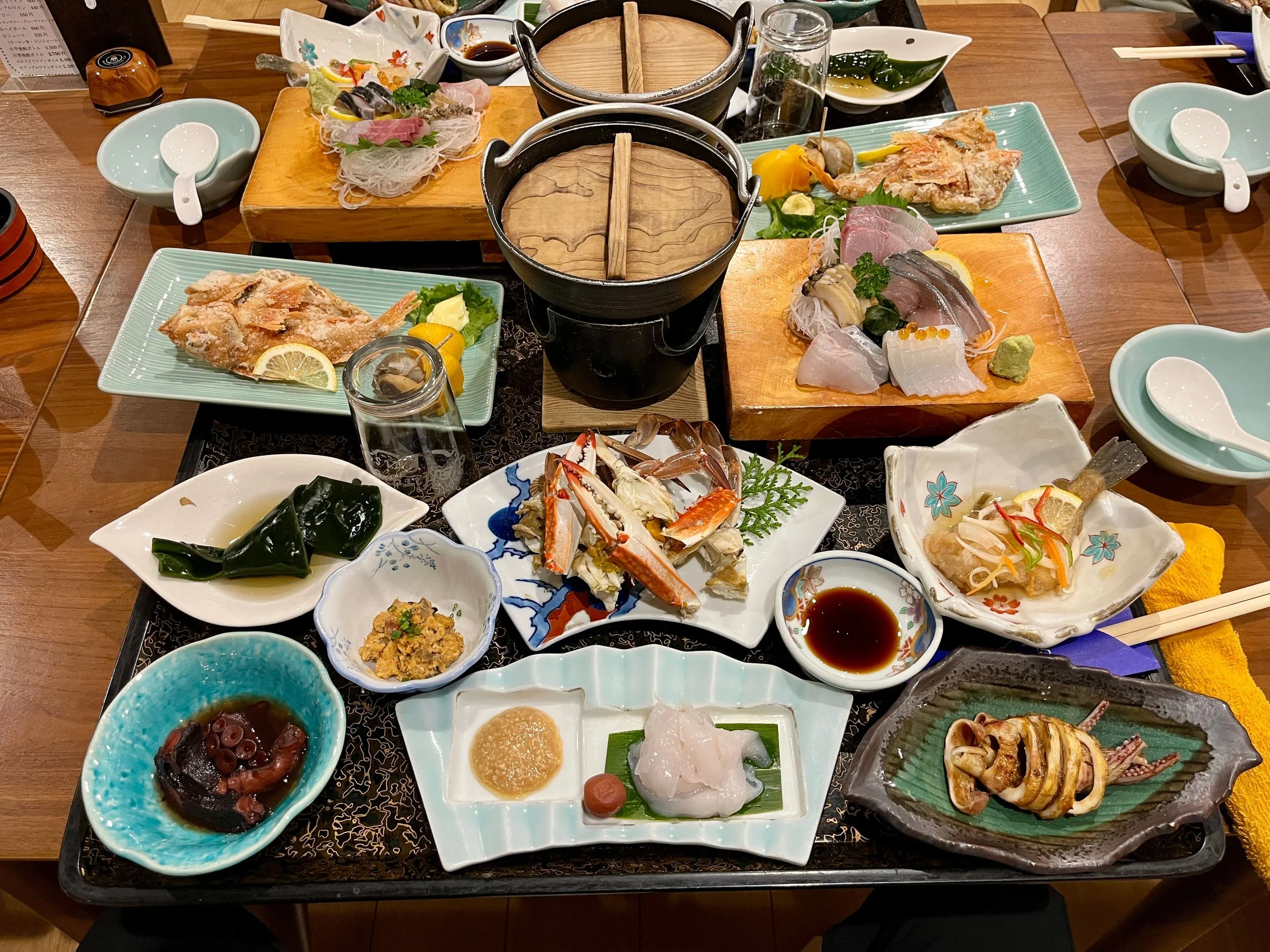
An incredible dinner at Hiraga Kaisou, a seaside inn located 10 minutes walk from Tanohata Station
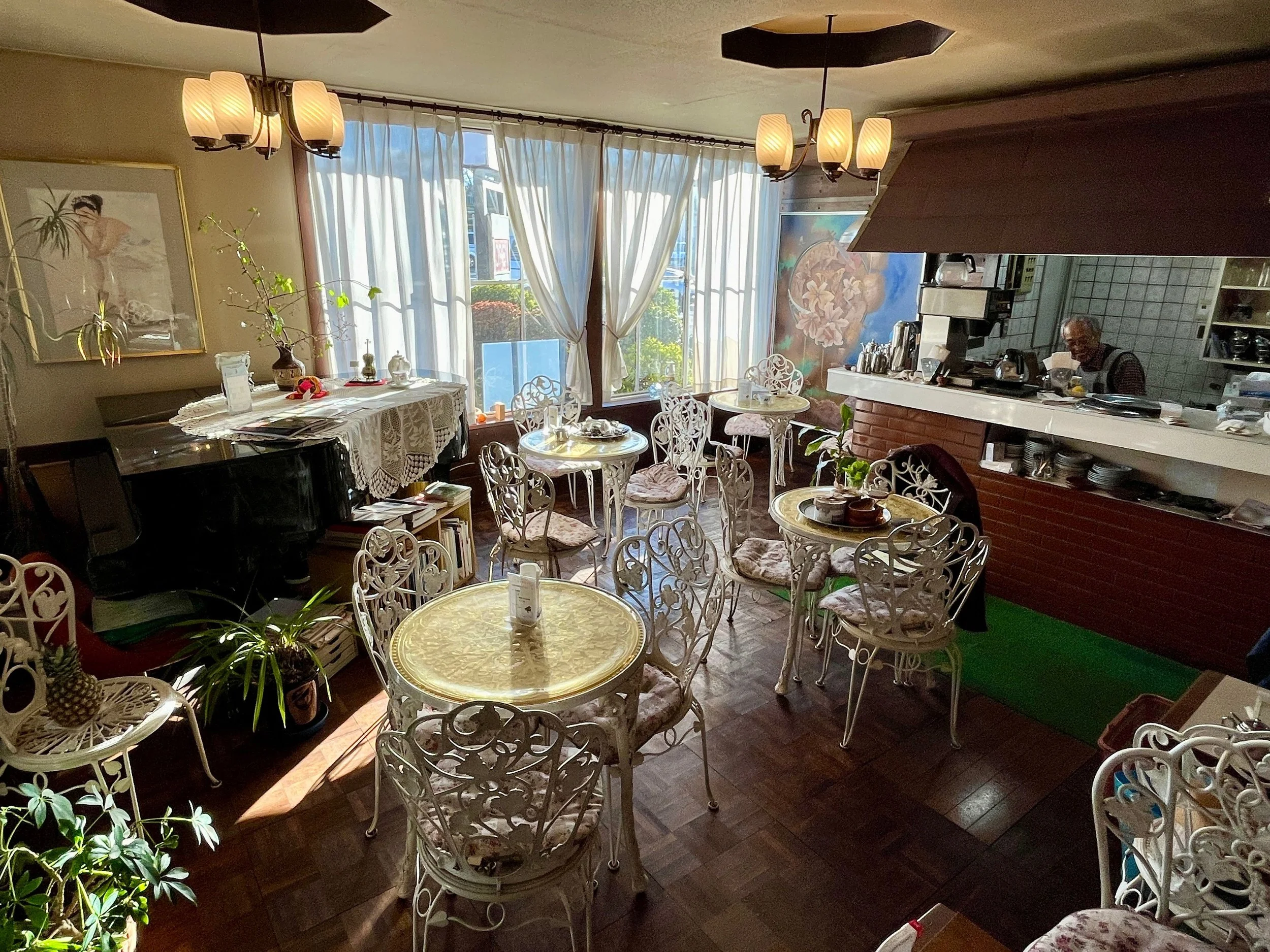
Stop by decades-old “kissa” style cafes for coffee, pizza toast, and other treats. Make sure to refill your bottles too!
Island Resupply: Not All Islands Are the Same
The MCT's islands in Miyagi Prefecture have very different levels of infrastructure.
Kinkasan: There is no convenience store or supermarket. The shrine operates a light-meal cafeteria, which may be closed on some days, along with vending machines and shrine accommodation. Don't depend on the cafeteria as your only food source.
Ajishima: Facilities are limited and small local businesses can have unpredictable opening hours. Camping outside designated places is prohibited, so confirm both food and overnight arrangements before travelling.
Tashirojima: Tashirojima is better served than the other two, but still limited. Some food is available locally, and Manga Island is an official accommodation and camping facility operating roughly from spring through autumn. I recommend staying there - it has cute cat-shaped cabins and a nice bath too!
For any of the islands, bring enough food and water that your day does not depend on a particular business being open.
Timing Your Meals
The bigger constraint on this trail often isn't whether food exists. It's when it's available. Many seafood restaurants finish lunch service around 14:00. Some reopen for dinner; others are lunch-only. Hours and weekly closing days can change, so treat listings on platforms like Google Maps as a rough guide rather than a guarantee! If you're unlikely to reach town before lunch finishes, buy something earlier. Convenience-store food, supermarket bentos and onigiri are extremely useful for this. Fishing ports also reward early starts. A market breakfast can be both one of the best meals of the day and one of the safest bets for actually finding somewhere open.
Rule of Thumb
When leaving a proper town, I carry at least 1-2 extra emergency meals (like freeze-dried pasta/rice and a handful of snacks. Don't assume every fishing village on the map has a shop - many don’t! Vending machines are widespread and appear in some surprisingly small settlements, but there are also long stretches with few or none. And I’d recommend never making a vending machine your only food or water plan - they can be more of a treat/surprise.
Practical Resupply Tools
A few useful options can make resupplying much easier on a longer MCT hike.
Amazon Deliveries While You're Hiking
Amazon Japan can deliver many eligible orders to pickup locations, including Amazon Lockers and participating convenience stores.
This can be really useful when you're moving from town to town. Lose a charging cable? Need another dry bag, power bank or some other piece of gear? You may be able to order it ahead and collect it further along your route.
When ordering from Amazon.co.jp, choose an official pickup location / 受取スポット during checkout and check both the expected delivery date and collection deadline carefully.
Not every product or location is eligible, so make sure the pickup option actually appears during checkout. Gas canisters and other dangerous goods aren't eligible for normal pickup-point delivery.
Use the MCT Trail Supporters
The official MCT Trail Supporters network includes local shops, accommodation, campsites and other facilities that offer different types of help to hikers.
Depending on the location, that can include water, toilets, charging, Wi-Fi, showers, laundry, luggage storage, tent space, food, camping gas and hiking supplies.
Services vary considerably between Supporters, and opening hours can change, so always check the current official list rather than assuming a particular service will be available.
See Current Trail SupportersCamping Gas: Buy It in Japan
You cannot take camping gas canisters onto a flight to Japan, either in your carry-on or checked baggage. Plan to buy fuel after you arrive.
If you use the common screw-threaded backpacking canisters usually called OD cans in Japan, they're available along the MCT, but not consistently enough to wait until you're almost empty.
Good places to look include:
- Outdoor shops
- Larger home-improvement stores, like the DIY Chain Store, DCM
- Selected MCT Trail Supporters
- TRAIL GATE at the Natori Trail Center
TRAIL GATE currently stocks gas canisters, and several Trail Supporters along the route also list gas or fuel among their services. Always confirm current stock before planning around a particular shop.
If you're thruhiking, identify your next reliable fuel stop before your current canister gets close to empty.
You'll also see long, slim CB or cassette-gas canisters widely sold in Japan. They're easier to find, but require a compatible stove, so don't assume they'll fit a standard screw-threaded backpacking stove.
Don't rely on ordering gas canisters to an Amazon Locker or convenience-store pickup point. Gas canisters are treated as dangerous goods and aren't eligible for normal pickup-point delivery.
Check Trail Supporters See TRAIL GATEDietary Restrictions
Rural Tohoku can be very challenging for restricted diets. Vegetarian, vegan and halal options are limited outside the larger towns, and ingredients aren't always obvious. Fish stock is common. So are seafood, mirin, sake and wheat. If you have strict dietary requirements, ask specifically about ingredients rather than relying only on broad labels such as "vegetarian", and expect to self-cater more often on remote sections.
A few useful current examples:
Ohakozaki no Yado, near Kamaishi: vegetarian and halal meals can be arranged. Discuss dietary requirements when booking.
Sunsunkan, Minamisanriku: can accommodate vegetarian, vegan and halal diets. Arrange requirements in advance.
Warung Mahal, Kesennuma: an Indonesian restaurant using halal-certified ingredients and no pork.
See my blog article on “10 Vegan and Vegetarian Restaurants on the Michinoku Coastal Trail” for more!
Food, Water & Resupply FAQ
Quick answers to some of the most common questions about eating, drinking and resupplying on the Michinoku Coastal Trail.
Is tap water safe to drink along the Michinoku Coastal Trail?
Yes. Normal tap water in Japan is safe to drink unless marked otherwise. I regularly refilled at accommodation, visitor centres, public facilities and other appropriate locations along the trail.
How much water should I carry?
It depends on the section, season and weather. I generally carried at least 1.5 litres, with capacity for up to 3.5 litres on remote stretches. Check your next confirmed water source before setting off and carry more in hot weather.
Do I need a water filter?
Not for normal tap water. Natural springs, streams and rivers are different, so don't assume untreated water is safe just because it looks clean.
What are the hardest sections for food resupply?
The Omoe Peninsula is the biggest gap, with roughly 45–50 km without dependable resupply. Food also needs more careful planning around the Sea Alps, Funakoshi, Hakozaki and Ogatsu peninsulas, and some of the islands. Check the official Data Book before each remote section.
Can I rely on vending machines?
No. Vending machines are widespread and turn up in some surprisingly small settlements, but there are long sections with few or none. Treat them as useful extras rather than your only food or water plan.
What are MCT Trail Supporters?
They're local businesses and facilities that provide different types of support to MCT hikers. Depending on the location, that can include water, toilets, charging, Wi-Fi, food, showers, laundry, camping space, gas and hiking supplies. Check the current official list because services vary.
Can I buy camping gas along the trail?
Yes, but availability is uneven. Outdoor and home-improvement stores, TRAIL GATE at the Natori Trail Center and selected Trail Supporters are useful options. Plan your next fuel stop before your canister is nearly empty.
Can I send Amazon orders to a pickup point while hiking?
For many eligible Amazon Japan orders, yes. Choose an official pickup location during checkout, check the expected delivery date and make sure you'll arrive within the collection period. Not every item is eligible, and gas canisters and other dangerous goods aren't suitable for normal pickup-point delivery.
Are vegetarian, vegan and halal meals easy to find?
Not consistently in rural areas. Larger towns offer more options, but on remote sections expect to self-cater more and contact accommodation in advance. Fish stock, seafood, mirin and other ingredients can also appear in dishes that may initially look vegetarian.