Recommended Hike:
Kinkasan Island

Kinkasan is home to over 500 free-roaming deer, regarded as messengers of the Gods in Shintoism
Kinkasan Island Hike
Kinkasan, considered one of Tohoku’s most sacred places, offers a unique blend of nature, spirituality, and culture. The island is home to a renowned shrine, ancient forests, and hundreds of free-roaming deer that are regarded as messengers of the gods.

Hiking map around Kinkasan Island, approximately 5.5 kilometre loop

Planning an overnight around your Kinkasan trip?
Boats leave from both Onagawa and Ayukawa. Where you stay the night before can make the ferry logistics considerably easier.
I stayed here and really enjoyed it. The colourful mobile-home accommodation is right beside Onagawa Station, making it a particularly convenient base before or after a Kinkasan trip.
Check availability on Agoda →Near Ayukawa Port, with ocean views and a strong focus on seafood from the waters around Kinkasan. A useful spot if you want to position yourself close to the Ayukawa boats the night before.
Check availability on Agoda →These are affiliate links. I may earn a small commission to help keep this website going, at no extra cost to you.
Overview
Kinkasan Island (金華山), off the coast of Ishinomaki City, is a remarkable place. The island is renowned for Koganeyama Shrine, a Shinto shrine that attracts hundreds of thousands of visitors annually, seeking blessings for wealth and financial good fortune.
***First things first; planning a trip to Kinkasan can be challenging due to the limited boat schedule***
Getting enough time on Kinkasan can be surprisingly difficult. Ferry services are limited, schedules vary by date, and some day-trip sailings leave only a short window on the island.
The full 5.5 km loop is relatively short, but it includes a steep climb and descent. When I hiked Kinkasan, my partner and I ended up sprinting the final section to make our return boat.
If completing the full hiking loop is important to you, check the latest boat schedules before finalising your itinerary. Look for a sailing that gives you enough time on the island, consider arranging a sea taxi, or stay overnight at Koganeyama Shrine.
Boat schedules can change and services may be cancelled because of weather or sea conditions, so always check again shortly before travelling. That being said - if you can make it work - it’s worth the hassle in my opinion! It was one of the most memorable sections of the MCT.

Giant trees line the path to the entrance of Koganeyama Shrine
Koganeyama Shrine (黄金山神社)
The heart of Kinkasan's spiritual allure is the Koganeyama Shrine, dating back to the 8th century. It's believed that making annual pilgrimages to the shrine for three consecutive years brings lifelong wealth and fortune. Adding to its uniqueness, the shrine has a ritual where visitors can wash their credit cards in a fountain beside the Ebisu and Daikokuten statues, symbolizing the acquisition of wealth and fortune.
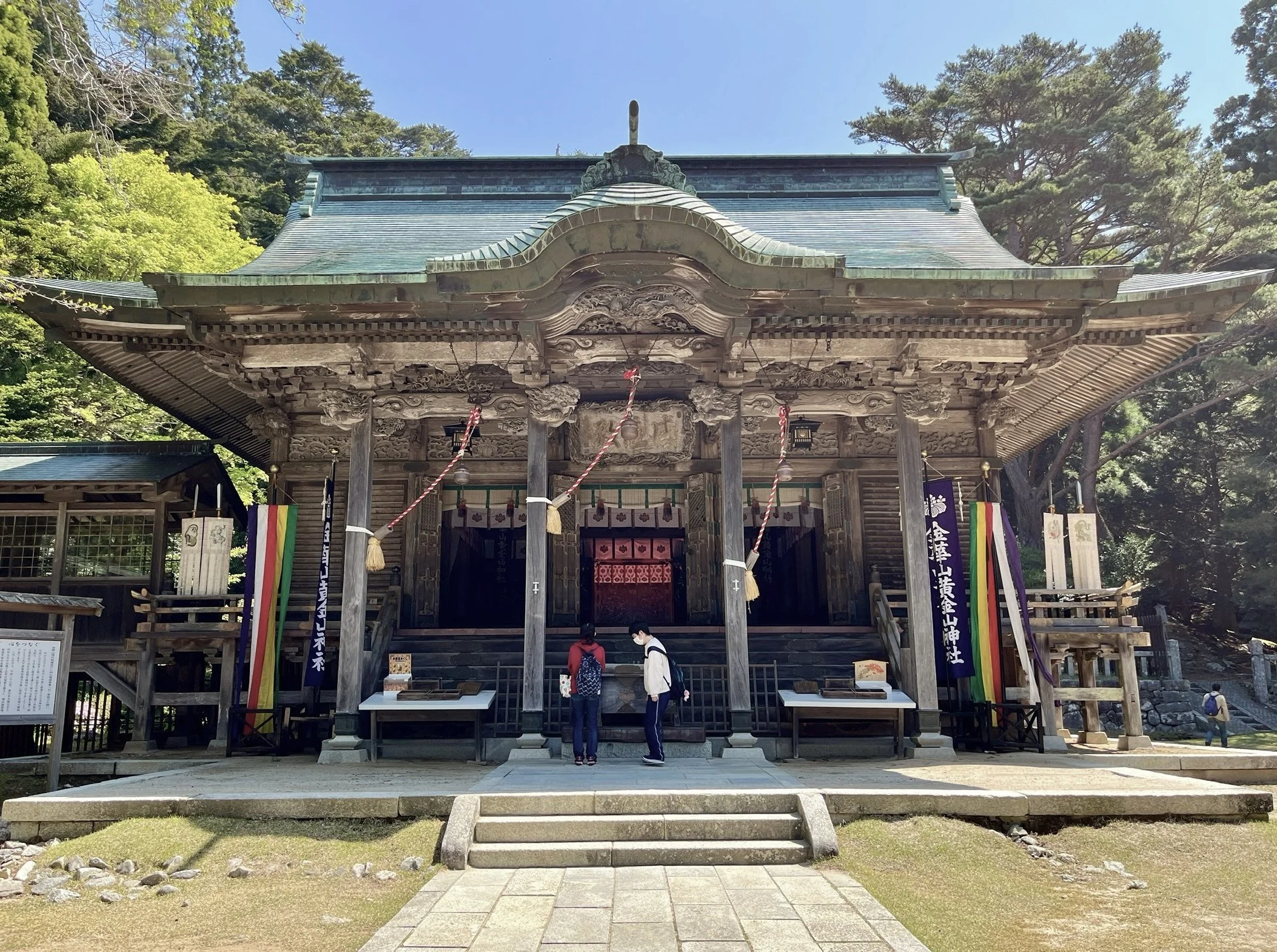
The spritual heart of Kinkasan, Koganeyama Shrine

An ancient path leads towards the summit of Kinkasan
Wildlife
The island's rugged terrain, lush forests, and coastal views make Kinkasan a memorable hike. The island is home to over 500 free-roaming deer, regarded as messengers of the Gods in Shintoism. These deer, similar to those in Nara, have been treated with care and reverence for centuries by visitors. The shrine offers deer feed for sale, allowing for close interactions. However, visitors should be cautious as these deer are fearless around humans.
Beware: watch out for deer during the mating season for males (September-November) and the birth season for females (May-July), as they can be aggressive.

The trail winds through lush, ancient forests around the island

Hikers can find the trail entrance near Koganeyama shrine
Cultural Practices
With a history stretching back over 1200 years, Kinkasan is considered one of Tohoku’s ‘most sacred locations’ (alongside Yamagata’s Dewa mountains and Aomori’s Mt. Osore) and is a spiritual training ground for ‘Shugendo’, a Japanese mountain-ascetic tradition influenced by Buddhism, Shinto and older traditions of mountain worship.
The island's culture is highlighted by the antler-cutting ritual performed on the first Sunday of October, making the male deer safer. The antlers are crafted into charms and talismans, popular among both the faithful and tourists. There is also a small shrine at the summit of Kinkasan that offers beautiful views of the surrounding bay.

A small shrine awaits you at the top of Kinkasan island, after a steep ascent

Enjoy the view from the summit of Kinkasan
Getting There
Planning the boat journey is the most important part of a Kinkasan hike. Boats operate from both Onagawa and Ayukawa, but sailing dates and departure times vary throughout the year. Do not build your itinerary around an old timetable. Check the relevant operator's current sailing calendar when planning, then check again shortly before travelling, particularly if the weather looks poor.
From Onagawa
Boats to Kinkasan depart from Onagawa Sightseeing Pier, within walking distance of Onagawa Station. The route is operated by Ushio Planning, with regular and additional sailings shown on its online calendar. Reservations are recommended on busy dates.
Hotel El Faro
I stayed here and really enjoyed it. It is right beside Onagawa Station, making it convenient before or after taking the boat to Kinkasan.
Check availability on Agoda →From Ayukawa
Boats also operate from Ayukawa Port on the Oshika Peninsula. This can be the more convenient option if you are already walking this part of the Michinoku Coastal Trail. Regular sightseeing boats and reservation-based sea taxis operate depending on the date. Sea taxis may also provide more flexibility if you need longer on Kinkasan for hiking, but confirm the arrangement and price directly when booking.
CHECK CURRENT AYUKAWA BOATS & RESERVATIONS →
Important: strong winds, high waves and other conditions can cause cancellations. Always check the latest operating information before heading to either port.
Accommodation
Staying overnight at Koganeyama Shrine can be one of the best ways to experience Kinkasan, particularly if the ferry timetable does not leave enough time for the full hiking loop.
The shrine offers traditional overnight okomori accommodation. Stays currently include dinner, breakfast and participation in the first morning prayer ceremony.
The accommodation is intentionally simple rather than hotel-like. Guests are asked to bring personal items such as towels and a toothbrush, and advance booking is strongly recommended (¥12,000+ per person including two meals as of 2026)
Shimameguri no Yado Sakai
If you are taking the boat from Ayukawa, Sakai is a good option on the Oshika Peninsula close to the port. The hotel looks across the sea towards Kinkasan and has a beautiful bath.
Check availability on Agoda →
Jizo statues in Japan, also known as O-Jizo-sama, are revered as the guardian deity of children and travelers.
In summary, Kinkasan Island is a unique place for a hike, offering a serene blend of spiritual traditions, natural beauty, and wildlife. It's an ideal place for those seeking a peaceful escape and an opportunity to engage with Japanese cultural and religious practices. Just make sure to plan carefully - and don’t miss your return ferry!